
Posts by James Newcomb
Why I switched to YouTube
When I first got into the podcasting game in 2015, it was quite different than it is today, for a number of reasons. AI has of course simplified many of the tedious, time-consuming elements of the process, to the point that hiring an editor to do such things seems silly. And I’m glad I got…
Read MoreThe Computer Isn’t the Problem
Technology is supposed to make life easier. Yet anyone who has stared at a frozen screen, fought with an automated customer-service system, or wondered why two pieces of software refuse to communicate knows how quickly technology can become the problem instead of the solution. That tension was at the center of my conversation with IT…
Read MoreAI bot tries to become the master
Interesting exchange I just had with ChatGPT. I was trying to brainstorm some ideas on emails to write, and rather than just list some ideas, it proceeds to give a step-by-step tutorial on how to write effective emails. If you’ve used ChatGPT, you might know how it goes. You make a simple request for a…
Read MoreChinese Nationalism: The Temporary Fix That Became Permanent
Beeson (2014) writes that the 1911 Revolution marked the transition from imperial civilization to the nation-state, thus establishing nationalism as the predominant political force in China. While this development was perhaps necessary in order for China to remain relevant on the international stage in 1911, one must wonder if the adoption of nationalism in China…
Read MoreProtected: Madison
There is no excerpt because this is a protected post.
Read MoreDemocratic backsliding in Tunisia: A U.S. foreign policy memo
Policy Memo: Democratic Backsliding in Tunisia James D. Newcomb Robertson School of Government Regent University GOV 723: Democracy and Democratic Development Dr. A. J. Nolte June 26, 2026 I attest this submission is my own original work, and was not created with unauthorized use of AI in accordance with the course syllabus. Executive Summary Tunisia…
Read MoreThe Moment I Became a Man
I remember the summer of 1994 quite well. In between two major life events — that being graduating high school and shipping off to basic training — I toured the U.S. with the Madison Scouts Drum and Bugle Corps. At the time, it was a thrill. I’d had some good moments in high school, but…
Read MoreRIP, —
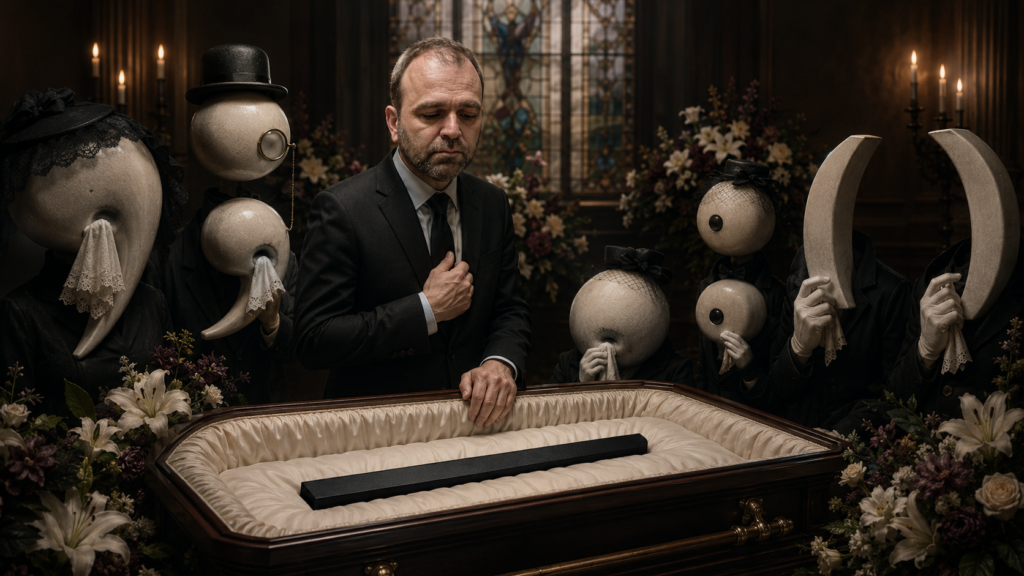
The em dash is dead. Long live the em dash. Remember the carefree days of yore when one could just write what was on his mind, use whatever punctuation he wanted, or no punctuation at all… And not be worried that his work would be viewed with suspicion as “written by AI”? That’s what has…
Read MoreRemembering the World That Was, and Still Is — with Dr. Zachary Porcu
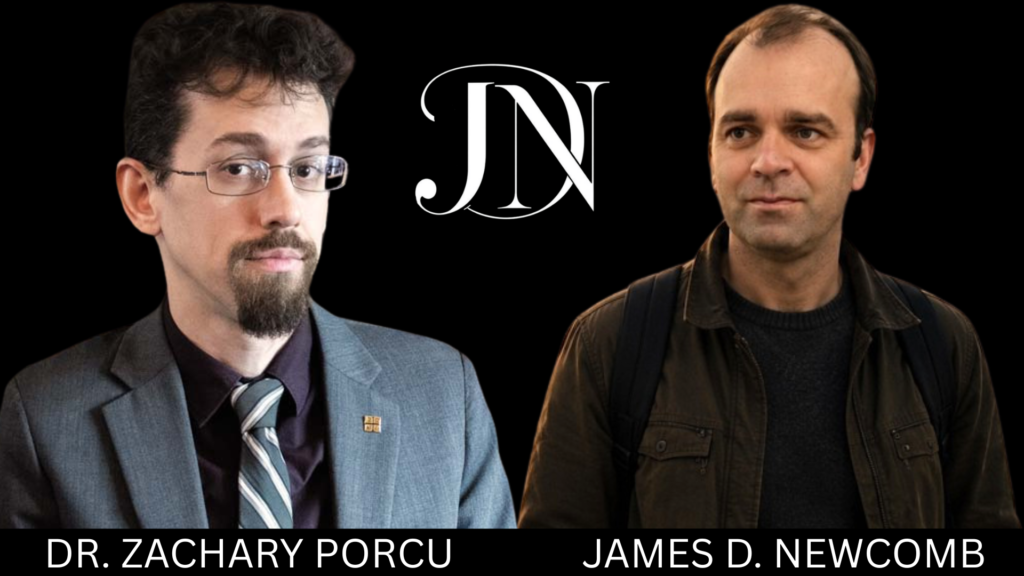
What if Christianity is not primarily a moral code, a private belief system, or a set of religious customs, but a way of seeing reality? In this episode, Dr. Zachary Porcu joins the podcast to discuss his book Journey to Reality: Sacramental Life in a Secular Age. The conversation begins with the origin of the book, which grew out of Zac’s work teaching theology to students who often knew the basic claims of Christianity but lacked the worldview that made those claims intelligible. From there, we move into the deeper question: what is Christianity? Zac argues that “religion” may not be the most useful starting point. Christianity is better understood as a worldview, a way of answering the question, “What is the nature of reality?” That question leads into one of the central concepts of the conversation: the arche. Zac uses the term to move beyond the flattened modern image of God as a distant old man in the sky. Instead, he describes God as the source of being itself, the one in whom all things live, move, and have their being. The conversation then turns to the Incarnation, the claim that the source of being, life, and truth became man in Jesus Christ. Zac explains why that claim was shocking both to Jews and Greeks, and why it remains revolutionary today. We also discuss the difference between modern Christianity as intellectual assent and ancient Christianity as sacramental participation. To become Christian is not merely to agree with Christian propositions. It is to be grafted into Christ through baptism, Eucharist, and the mysteries of the Church. Later in the episode, we discuss the Reformation, the rise of the secular nation-state, the older idea of symphonia between church and empire, and the myth that public life can ever be religiously or metaphysically neutral. This conversation was recorded near the beginning of my Orthodox life. In that sense, it captures not a finished statement, but a beginning: the attempt to understand a world that once was, and still is, even if many of us have forgotten how to see it. Episode highlights: 00:28 — Knowing the “what” of Christianity without knowing the “why” 11:00 — Moving beyond the modern cartoon image of God 15:30 — The Arche, life, and the reality behind living things 24:00 — Why modern Christianity is different from Paul’s context 31:00 — The Reformation and the rise of modernity 35:45 — Symphonia and the Byzantine vision of church and empire 37:30 — The secular nation-state and the myth of neutrality 43:45 — Sacraments as mysteries entered, not merely explained Resources mentioned: Dr. Zachary Porcu’s Website Journey to Reality Substack The Roots of Everything Hosted by Dr. Zac Porcu Journey to Reality: Sacramental Life in a Secular Age by Dr. Zachary Porcu About the guest: Dr. Zachary Porcu is an Orthodox Christian scholar, author, catechist, and host of The Roots of Everything. He is the author of Journey to Reality: Sacramental Life in a Secular Age, a book written to help modern readers understand Orthodox Christianity not merely as a set of doctrines or practices, but as a sacramental worldview. His work explores theology, history, philosophy, the Church Fathers, and the deep roots of the ideas that shape the modern world. Quotable quotes: “Christianity is not merely a set of rules. It is a way of answering the question: what is the nature of reality?” “To become Christian is not merely to agree with Christian ideas. It is to be grafted into Christ.” “The sacraments are not religious illustrations. They are mysteries we enter.” “There is no neutral worldview. Every society answers the question of reality, whether it admits it or not.”
Read MoreSingers in the Hands of an Angry Mob
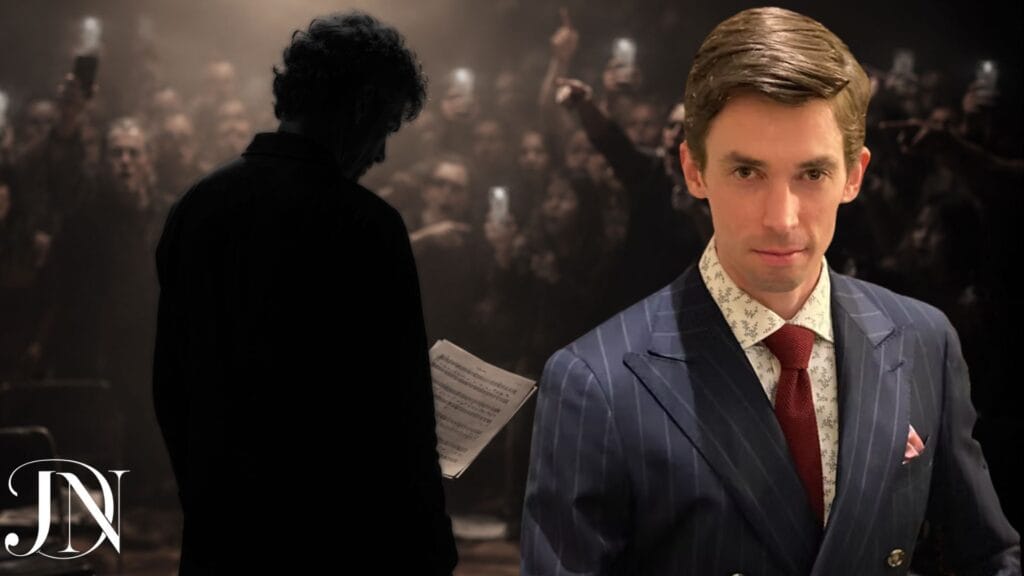
Daniel Elder is a talented composer of choral music. Until the spring of 2020, he was respected within that tiny niche of the music world. His original compositions had steady sales and were well-regarded by those who performed them. Then, as you recall, the world turned upside down. Covid was the big news of the…
Read More