Orthodox Faith
Remembering the World That Was, and Still Is — with Dr. Zachary Porcu
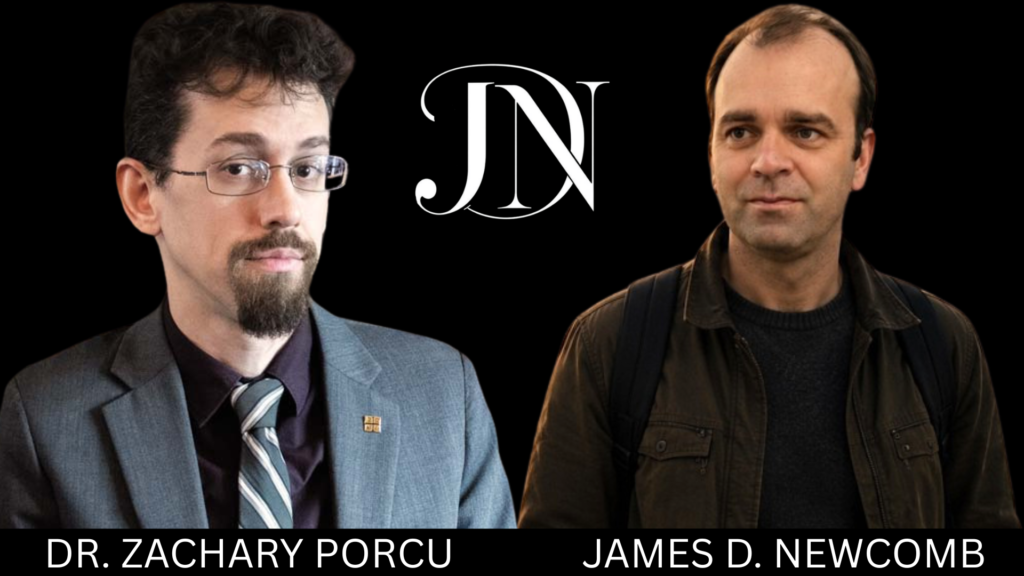
What if Christianity is not primarily a moral code, a private belief system, or a set of religious customs, but a way of seeing reality? In this episode, Dr. Zachary Porcu joins the podcast to discuss his book Journey to Reality: Sacramental Life in a Secular Age. The conversation begins with the origin of the book, which grew out of Zac’s work teaching theology to students who often knew the basic claims of Christianity but lacked the worldview that made those claims intelligible. From there, we move into the deeper question: what is Christianity? Zac argues that “religion” may not be the most useful starting point. Christianity is better understood as a worldview, a way of answering the question, “What is the nature of reality?” That question leads into one of the central concepts of the conversation: the arche. Zac uses the term to move beyond the flattened modern image of God as a distant old man in the sky. Instead, he describes God as the source of being itself, the one in whom all things live, move, and have their being. The conversation then turns to the Incarnation, the claim that the source of being, life, and truth became man in Jesus Christ. Zac explains why that claim was shocking both to Jews and Greeks, and why it remains revolutionary today. We also discuss the difference between modern Christianity as intellectual assent and ancient Christianity as sacramental participation. To become Christian is not merely to agree with Christian propositions. It is to be grafted into Christ through baptism, Eucharist, and the mysteries of the Church. Later in the episode, we discuss the Reformation, the rise of the secular nation-state, the older idea of symphonia between church and empire, and the myth that public life can ever be religiously or metaphysically neutral. This conversation was recorded near the beginning of my Orthodox life. In that sense, it captures not a finished statement, but a beginning: the attempt to understand a world that once was, and still is, even if many of us have forgotten how to see it. Episode highlights: 00:28 — Knowing the “what” of Christianity without knowing the “why” 11:00 — Moving beyond the modern cartoon image of God 15:30 — The Arche, life, and the reality behind living things 24:00 — Why modern Christianity is different from Paul’s context 31:00 — The Reformation and the rise of modernity 35:45 — Symphonia and the Byzantine vision of church and empire 37:30 — The secular nation-state and the myth of neutrality 43:45 — Sacraments as mysteries entered, not merely explained Resources mentioned: Dr. Zachary Porcu’s Website Journey to Reality Substack The Roots of Everything Hosted by Dr. Zac Porcu Journey to Reality: Sacramental Life in a Secular Age by Dr. Zachary Porcu About the guest: Dr. Zachary Porcu is an Orthodox Christian scholar, author, catechist, and host of The Roots of Everything. He is the author of Journey to Reality: Sacramental Life in a Secular Age, a book written to help modern readers understand Orthodox Christianity not merely as a set of doctrines or practices, but as a sacramental worldview. His work explores theology, history, philosophy, the Church Fathers, and the deep roots of the ideas that shape the modern world. Quotable quotes: “Christianity is not merely a set of rules. It is a way of answering the question: what is the nature of reality?” “To become Christian is not merely to agree with Christian ideas. It is to be grafted into Christ.” “The sacraments are not religious illustrations. They are mysteries we enter.” “There is no neutral worldview. Every society answers the question of reality, whether it admits it or not.”
Read MoreThinking Orthodox & A Primer on that “Other” Way of Christian Discipleship with Dr. Jeannie Constantinou
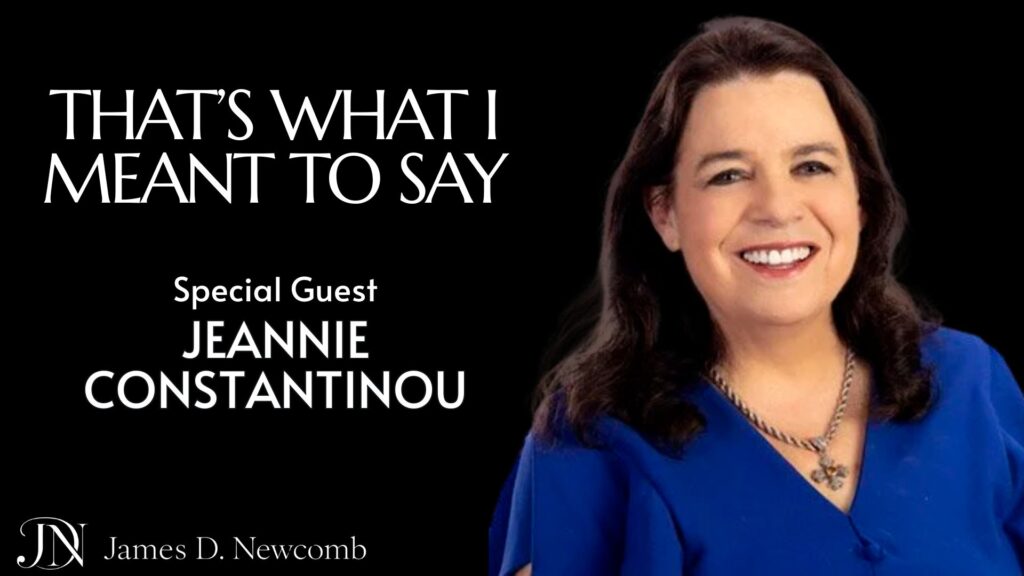
“The Orthodox mind, the mind of the Church, is the mind of Christ.” We welcome biblical scholar and author Dr. Jeannie Constantinou for a sweeping, heartfelt, and clarifying conversation on phronema—the ancient Christian mindset preserved in the Orthodox Church. I open the conversation by sharing my own journey of transitioning into Orthodoxy, reflecting on how Western Christianity shaped my early worldview and how the discovery of the Orthodox Church revealed an entirely different way of understanding faith, thought, and spiritual life. As you’ll hear, reframing an entire worldview and mindset does not happen overnight! In this episode, you’ll hear why Orthodoxy speaks so deeply to those seeking “something more” i.e. a fuller experience of Christ rather than a purely symbolic one. The discussion highlights the West’s long-standing reliance on human reason, logic, and systematic explanations, contrasted with the Orthodox emphasis on mystery, experience, sacrament, community, and the healing of the heart. To put it another way: We can’t possibly understand God in all His fullness, and we’re perfectly okay with that! Dr. Jeannie explains the ancient Greek concept of phronema. This goes beyond a mere “worldview.,” It is a mindset, disposition, and lived mentality that flows from the apostles and the early Church, unchanged for two millennia. She also explains in detail how the Orthodox Church has maintained continuity with Christ’s original intent, what early Christian worship actually looked like, why tradition (and the dreaded ritual) matters, and how one begins to cultivate the mind of Christ through prayer, humility, sacramental life, and participation in the community. Whether you’re new to Orthodoxy, curious about early Christianity, or simply wrestling with the limits of Western religious paradigms, this episode offers clarity, depth, and a pastoral invitation to encounter the reality of Christ via the fullness of His Church. Episode highlights: 01:10 – James’s transition (not conversion) from Protestant/Western Christianity into Orthodoxy 07:10 – The unfulfilled Protestant mindset: salvation as a “destination” vs. lifelong journey 10:10 – Western fixation on explanation vs. Orthodox acceptance of mystery 13:10 – What phronema is—and isn’t 14:10 – How Christ Himself taught “the mind of God” through His deeds and teachings 17:10 – The West’s attempt to reconstruct early Christianity through reason 21:10 – The problem of individualism and denominational fragmentation 24:10 – The Church is the physical body of Christ, not some invisible abstraction 28:10 – The Eastern Church didn’t “break off” from Rome 30:10 – Bishops, councils, and why the early Church rejected papal monarchy 34:10 – The sincere desire to rediscover early Christianity 37:10 – How the apostles taught—and preserved—Christ’s actual teachings 41:10 – Early Christian worship: sacred, communal, experiential 46:10 – Oral tradition and why Scripture was never meant to stand alon 49:10 – Understanding the much-maligned Constantine’s role in Church history 51:10 – Why ritual is natural, ancient, and thoroughly Christian 53:10 – How to acquire phronema through lived participation within community 01:03:10 – How to connect with Dr. Jeannie and closing remarks About the guest: Dr. Jeannie Constantinou is a biblical scholar, author, speaker, and longtime teacher of the New Testament and early Church. With academic training in Orthodox theology, patristics, biblical interpretation, and law, she brings both scholarly rigor and pastoral clarity to questions of Scripture, tradition, and the Orthodox Christian mind. Her books include Thinking Orthodox: Understanding and Acquiring the Orthodox Christian Mind, The Crucifixion of the King of Glory, and Guiding to a Blessed End. Through her writing, teaching, and podcast work, Dr. Constantinou helps Christians encounter the Bible not merely as a text to be analyzed, but as the living witness of the Church. Resources mentioned: Thinking Orthodox: Understanding and Acquiring the Orthodox Christian Mind by Jeannie Constantinou
Read More